Deep cleaning vs regular cleaning is not a difference of rooms — both cover the whole house. It’s a difference of depth on nine specific tasks: baseboards, doors and frames, AC vents, cabinet fronts, counters, showers, the microwave, frames and sills, and floor edges.
Everything below comes from the two checklists we publish, read side by side. I’ve spent since 2015 explaining this at kitchen tables, and it goes better with the actual lists than with adjectives.
Key Takeaways
| Question | Short answer |
|---|---|
| What’s the real difference? | Depth on nine tasks, not different rooms. |
| Biggest single gap? | Baseboards. Dusted on a regular clean; hand-wiped and scrubbed on a deep clean — and hand-wiping is a paid add-on on a regular visit. |
| What’s only on the deep list? | Doors, door edges and frames, and AC vents and return grilles. Neither appears on the regular checklist at all. |
| What’s the same on both? | Inside the oven and inside the refrigerator are add-ons either way, and neither includes moving furniture. |
| Which do I need? | Deep first if the detail work is overdue; regular after that to hold it. |
Deep Cleaning vs Regular Cleaning: the Difference Is Depth
Both services cover every room. Both dust, both do kitchens and bathrooms, both vacuum and mop, both sanitize high-touch surfaces, both empty the bins and make the beds. If you watched the crew arrive you couldn’t tell which one you’d booked.
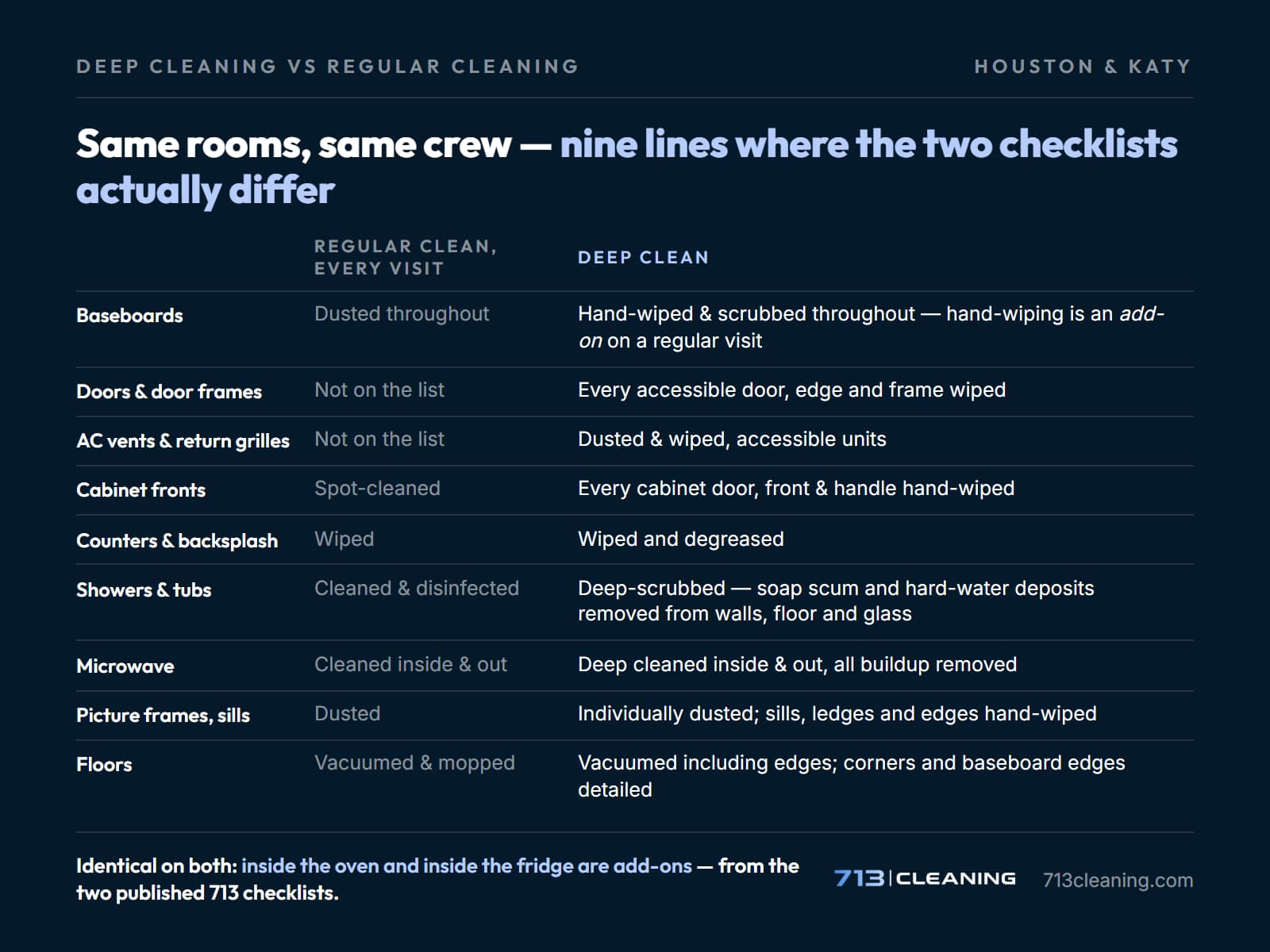
The difference shows up in the verbs. “Dusted” becomes “hand-wiped and scrubbed.” “Spot-cleaned” becomes “every door, front and handle.” “Cleaned and disinfected” becomes “deep-scrubbed, buildup removed.” Same rooms, more passes, by hand.
The Nine Lines That Actually Differ
Dusting and the detail work
- Baseboards — regular: dusted throughout. Deep: hand-wiped and scrubbed throughout. This is the clearest one, and here’s the tell that it’s real: hand-wiped baseboards appear on the regular checklist as a paid add-on. If it were the same job, it wouldn’t need to be.
- Doors, edges and frames — not on the regular checklist at all. On a deep clean, every accessible door gets its face, edges and frame wiped. Door frames collect a gray line at hand height that nobody notices until it’s gone.
- AC vents and return grilles — again, not on the regular list. Deep cleans dust and wipe the accessible ones.
- Picture frames and sills — regular dusts them. Deep dusts frames and knickknacks individually and hand-wipes sills, ledges and edges throughout.
The kitchen
- Cabinet fronts — regular: spot-cleaned. Deep: every cabinet door, front and handle hand-wiped. In a family kitchen that gap is one of the first things people notice.
- Counters and backsplash — regular: wiped. Deep: wiped and degreased. Grease is a film, not a spill; it needs a different product and a slower pass.
- The microwave — regular: cleaned inside and out. Deep: deep cleaned inside and out with all buildup removed.
Bathrooms and floors
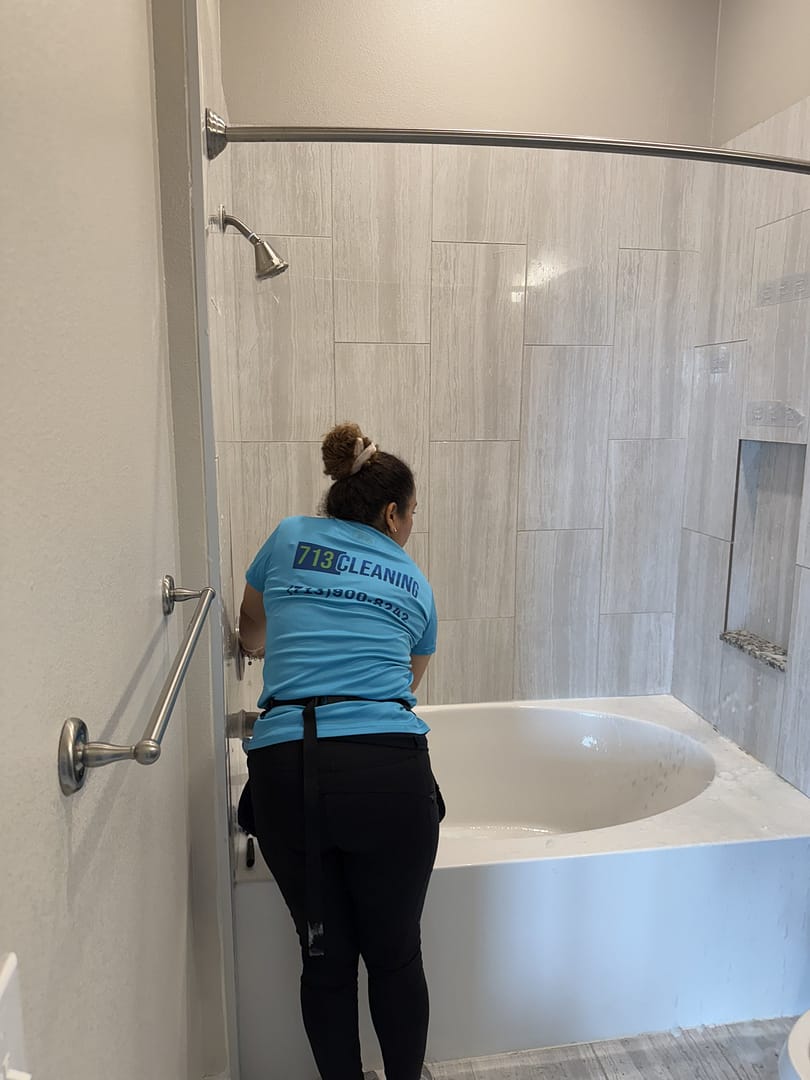
- Showers and tubs — regular: cleaned and disinfected. Deep: deep-scrubbed to take soap scum and hard-water deposits off the walls, the floor and the glass doors.
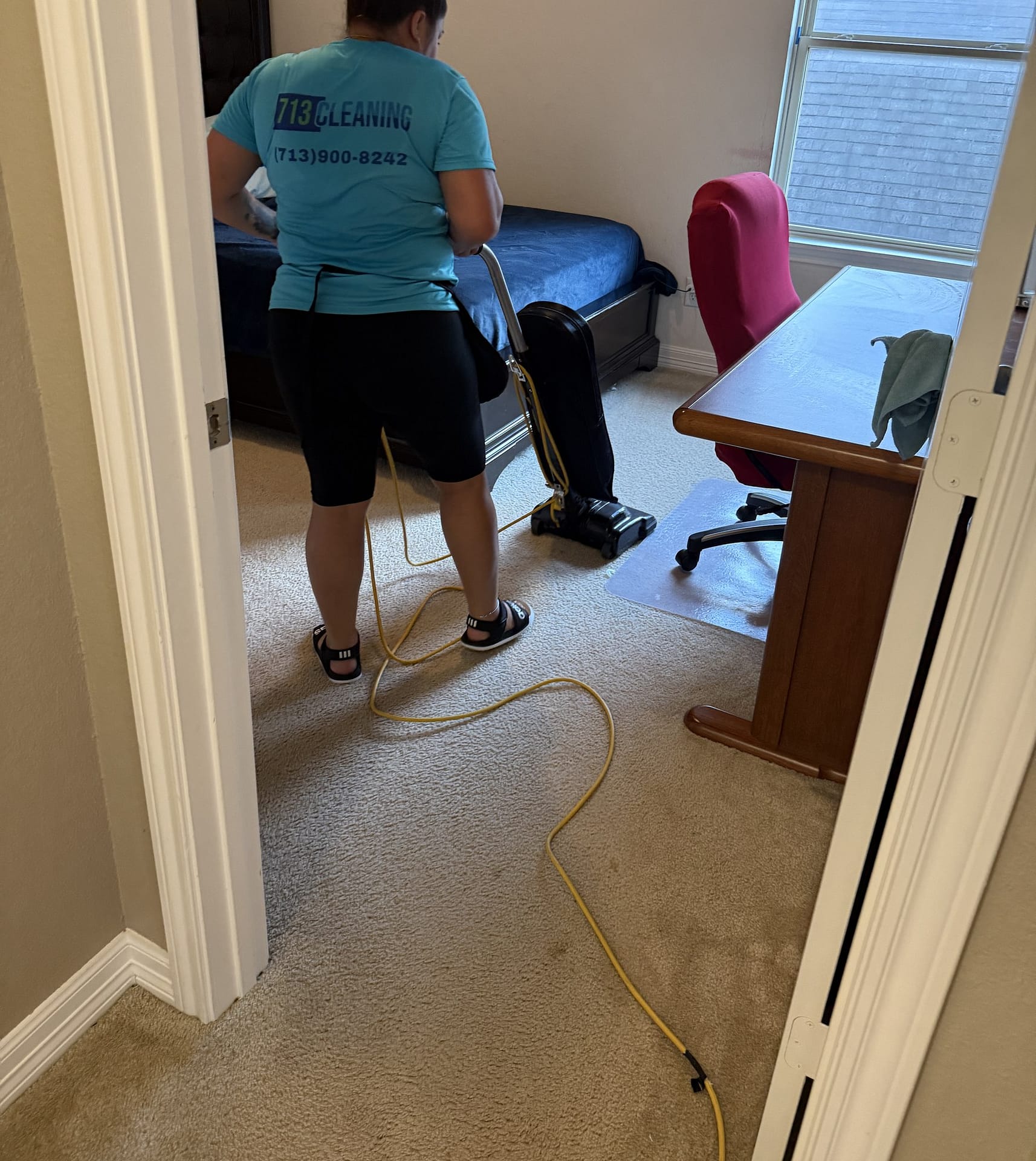
- Floors — regular: vacuumed and mopped. Deep: vacuumed including the edges, with corners and baseboard edges detailed.
Why the Bathroom Difference Is the One People Notice
Soap scum isn’t dirt, and that’s the whole reason these two services look so different in a bathroom. The USGS explains the chemistry plainly: in hard water, “soap reacts with the calcium (which is relatively high in hard water) to form ‘soap scum'”, and heated hard water leaves solid mineral deposits behind — scale on glass, on fixtures, inside the coffee maker.
I’m not going to quote you a hardness number for your street, because it varies by supply and I’d be making it up. What I can tell you is what we see: across the homes we clean in Houston and Katy, cloudy shower glass is the single most common thing clients point at during a walkthrough, and it’s almost always deposits rather than dirt.
A regular clean disinfects that shower and leaves it hygienic. It does not take mineral scale off glass — that’s a scrub, not a wipe, and it’s on the deep list for exactly that reason. Which is why a shower can be genuinely clean and still look cloudy.
One honest limit: deposits come off, but glass that’s already etched by years of scale is damaged rather than dirty, and no clean reverses it.
What Is Identical on Both
Worth stating, because “deep” gets read as “everything”:
- Inside the oven and inside the refrigerator are add-ons on both. Neither service includes them by default.
- Neither moves furniture to clean underneath it.
- Neither hand-washes pots and dishes — both will load an empty dishwasher.
- Neither goes above a two-step ladder, and ceiling fans are done under 12-foot ceilings on both.
- Both sanitize high-touch surfaces, clean interior glass on patio and entry doors, empty and reline bins, and make beds.
Which One You Actually Need
The choice is usually about sequence, not preference.
Start with a deep clean if the detail surfaces are overdue — you can’t remember the last time baseboards, door frames or vents were touched, the shower glass has gone cloudy, or the kitchen cabinet fronts feel tacky. A recurring visit is built to hold a standard, not to establish one, which is why a deep clean is the standard first visit.
A regular clean is the right service if that reset already happened and you want it held. How often to repeat the deep clean after that is its own question — how often to deep clean a house in this climate has the honest answer.
If you want the full deep list rather than the nine differences, what is included in a deep cleaning walks it room by room. And if you’ve already booked one, a short evening of prep changes how much of the visit goes into scrubbing.
If You’re Starting From Scratch
Most homes we take on start with the deep clean and settle into a rhythm afterwards. Our deep cleaning service in Houston and Katy works the full published checklist with the same background-checked team, and if we miss something we come back and put it right.
Frequently Asked Questions
What is the difference between deep cleaning vs regular cleaning? Depth on nine tasks, not coverage. Baseboards are hand-wiped and scrubbed rather than dusted, doors and AC vents are included at all, cabinet fronts are done individually rather than spot-cleaned, counters are degreased, showers are scrubbed past the buildup, and floors are vacuumed to the edges.
Do I need a deep clean before starting a recurring service? Usually, yes — that’s why it’s the standard first visit. A recurring clean is designed to hold a level of clean rather than establish one, so if the detail work is overdue the first visit has to do it.
Is a deep clean just a regular clean done more slowly? No. Two things on the deep checklist aren’t on the regular one at all — doors with their edges and frames, and AC vents and return grilles. The rest is the same task done to a different standard.
Are the inside of the oven and fridge included in a deep clean? No. They’re add-ons on both services, quoted separately, along with interior window cleaning.
Why does my shower still look cloudy after a regular clean? Because disinfecting isn’t descaling. Hard water leaves mineral deposits that need scrubbing off, which is on the deep checklist. If the glass stays cloudy after a deep scrub, it’s etched rather than dirty, and that’s damage no cleaning reverses.