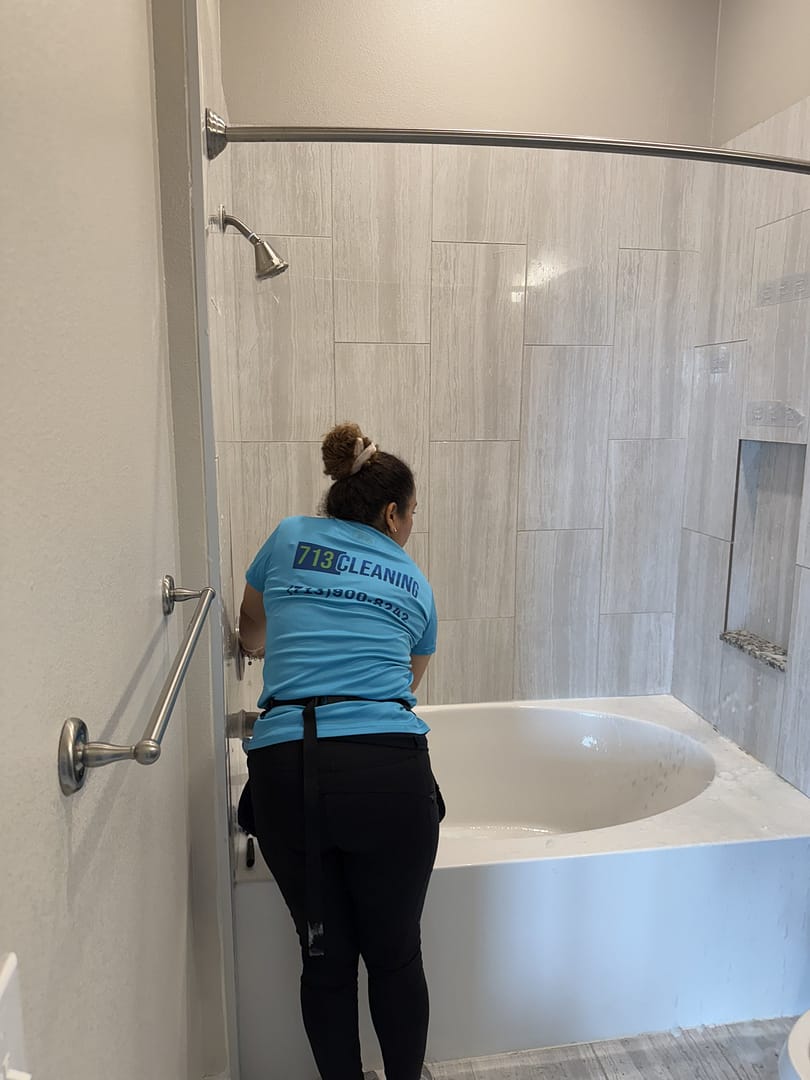
To degrease kitchen cabinets, start at the range hood: clean or replace its filter so less grease reaches the doors. Then test your finish on a hidden spot, wipe top to bottom with warm water and a few drops of dish soap on a wrung-out cloth, rinse with a plain damp cloth, and dry.
We cook a lot at our house, so I’m not going to tell you to cook less. On a deep clean my crews hand-wipe every cabinet door, front and handle in the kitchen, so this is the method — and where cleaning stops and refinishing starts.
Key Takeaways
| Question | Short answer |
|---|---|
| Why are my cabinets sticky? | Cooking grease that got past the hood, plus every hand that grabbed a handle mid-recipe. In the homes we clean, the doors next to the range carry the most. |
| What should I use? | Warm water and a few drops of dish soap on a cloth wrung out barely damp. Nothing abrasive, and test anything stronger inside a door first. |
| What about the range hood filter? | A metal mesh or baffle filter is washable; a charcoal filter isn’t — the manufacturer says to replace it. Your hood’s manual sets the schedule. |
| Does a cleaning service degrease cabinets? | A regular visit spot-cleans fronts and handles; a deep clean hand-wipes every door and degreases the range hood’s outside. Inside the cabinets is move-out only, and the hood filter stays yours. |

Why Kitchen Cabinets Get Greasy
Grease doesn’t stay in the pan. Range hood maker Broan-NuTone describes the filter’s job as capturing grease, smoke, cooking particles and odors before they spread through the home, and says keeping it maintained protects kitchen surfaces from grease buildup. What gets past a clogged filter, or a hood that isn’t running, settles as a film — and in the homes we clean, it’s heaviest on the doors closest to the range and around every handle. That’s general manufacturer guidance; your own hood’s manual comes first.
Degrease Kitchen Cabinets in 5 Steps
1. The range hood filter first
Turn the hood off and let it cool, then take the filter out the way the manual shows. Then identify it:
- Metal mesh or baffle: washable and reusable. Broan-NuTone’s general guidance is to clean these monthly; a soak in hot, soapy water and a soft brush is the usual route unless your manual says otherwise.
- Charcoal (ductless hoods): not washable. The same guide says to replace it, typically every three to six months.
Their quick check for a metal filter: hold it up to a light, and if light struggles through, it’s due. Broan-NuTone also notes that grease built up in a neglected filter can become a fire hazard — one more reason this step goes first. The manufacturer’s own words are that its recommendations should always take priority, so your hood’s manual wins over this post.
2. Know your finish, and test it
Painted, stained and clear-coated wood, laminate and thermofoil all clean the same way at the gentle end, and differ at the strong end. Test anything stronger than dish soap on the inside of a door first, and keep scouring pads and abrasive powders away from every finish — they cut the grease and the finish together.
3. Warm, soapy, top to bottom
A few drops of dish soap in warm water, a soft cloth wrung out until it’s barely damp, and the doors nearest the range first. Work top to bottom so drips land on what you haven’t cleaned yet, and don’t skip the bottom edge of the upper doors or the frame around them. Water left at the seams and edges is what a finish likes least, which is why the cloth is wrung out, not dripping.
4. Rinse, then dry
A second cloth with plain water takes the soap off; a dry towel follows. Cabinets that feel sticky right after cleaning usually still have soap on them, not grease — the rinse is the step that fixes it.
5. Handles, hardware and the hood itself
Go around the base of each handle and knob, where the film collects. Then the hood: the outside, the underside around the filter frame, and stainless wiped with the grain using a product made for stainless. A painted hood gets the same soapy cloth as the doors.
Yours vs the Crew: Who Degreases What
| In the kitchen | Whose job |
|---|---|
| Cabinet fronts and handles spot-cleaned | The crew, every regular visit |
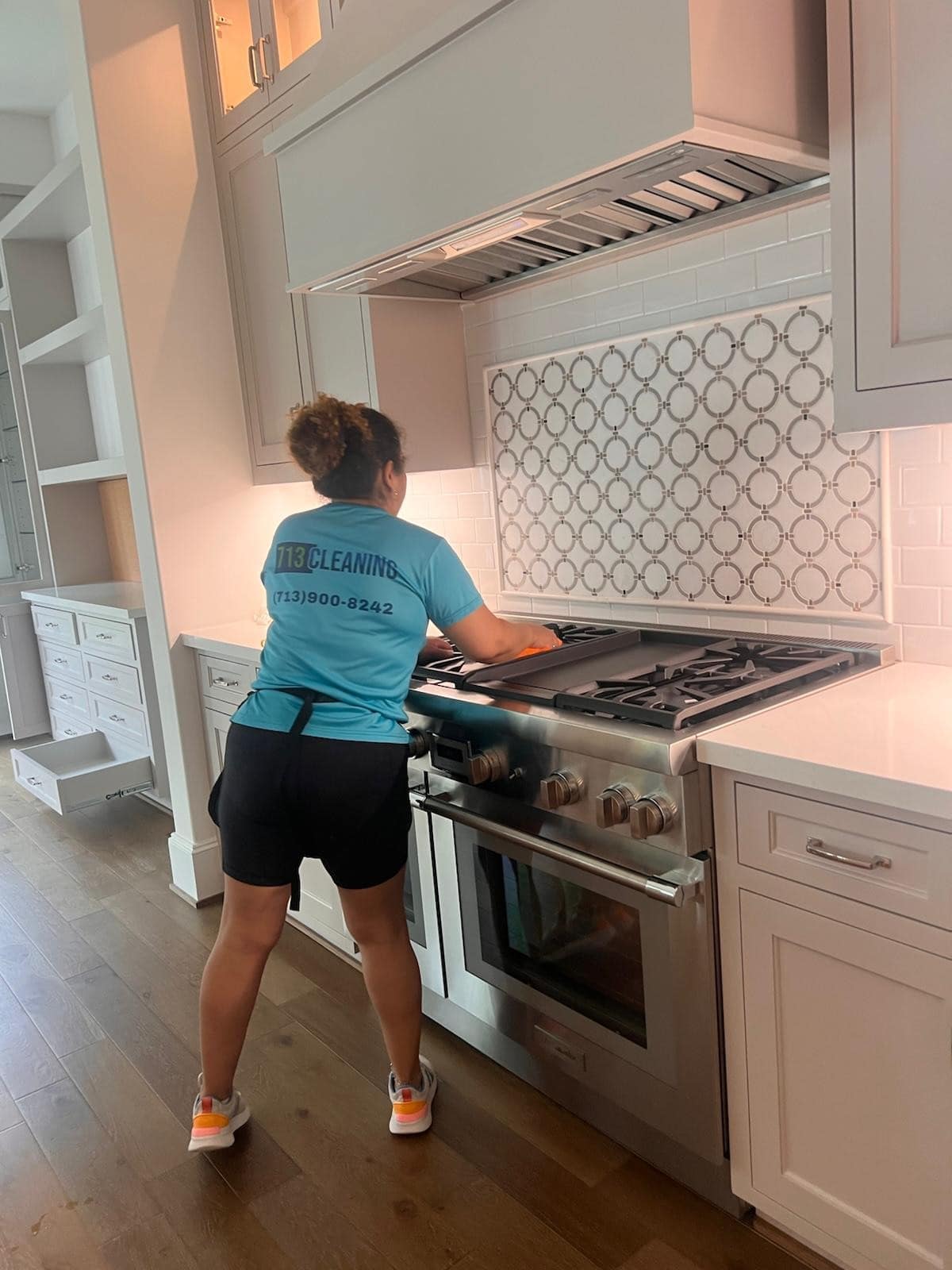
| Every cabinet door, front and handle hand-wiped; counters and backsplash degreased | The crew, on a deep clean |
| Inside the cabinets and drawers | Only in a move-in/move-out clean, when they’re empty — not part of a regular or deep clean |
| The stovetop and the range hood’s exterior, cleaned and degreased | The crew, on a deep clean (and on a move-in/move-out clean) |
| The range hood filter, the tops of tall cabinets | Yours — the filter is on no checklist, and crews don’t climb higher than a two-step ladder |
| Refinishing, repainting, re-gluing a peeling door | Outside any cleaning |
The difference between those first two rows is most of the difference between a deep clean and a regular one in a kitchen — every door by hand versus the fronts that need it.
Houston and Katy Kitchens
The AC runs most of the year here, so dust keeps landing on the high, flat surfaces. On top of a grease film it doesn’t dust off — it smears. If the tops of your upper cabinets feel gritty and tacky at once, they get the soapy cloth, not a duster, and a sturdy step stool, not a chair.
What Cleaning Can’t Fix on Cabinets
A clean takes the film off. It can’t put back what the grease, heat or water already took.
- A clear coat gone soft, cloudy or worn through next to the range comes back clean, not refinished.
- Paint worn off at the handles shows more once the grime is gone, not less.
- Peeling thermofoil or laminate near the oven is a heat problem, not dirt.
- Swollen edges by the sink or dishwasher are water damage.
Those are a refinisher’s or a cabinet pro’s conversation, and saying so is part of the job.
What Good Looks Like
- The doors next to the range feel smooth when you run a finger down them.
- No halo around the handles in low light.
- The filter lets light through, or a fresh charcoal one is in.
- The film stays away longer than it did before you started on the filter.
Keep Going
This is step three of how to deep clean a kitchen, the whole seven-step order. If you’re doing the full job, cleaning inside the oven and fridge is the other half people ask about.
If you’d rather hand it off, our deep cleaning in Houston and Katy hand-wipes every cabinet door, front and handle, and degreases the stovetop and the outside of the range hood alongside.
Frequently Asked Questions
What’s the best way to degrease kitchen cabinets without damaging them? Warm water with a few drops of dish soap on a cloth wrung out barely damp, top to bottom, then a plain-water rinse and a dry towel. Test anything stronger on the inside of a door first, and keep abrasives off every finish.
Why are my cabinets still sticky after I clean them? Usually it’s soap left behind, not grease. Go over them again with a cloth dampened in plain water, then dry. If they’re tacky again soon after, check the range hood filter.
How often should you clean a range hood filter? Follow your hood’s manual first. As general guidance, Broan-NuTone says to clean metal mesh and baffle filters monthly and to replace charcoal filters, which can’t be washed, every three to six months — more often if you fry a lot.
Do house cleaners clean inside kitchen cabinets? Not on a regular or a deep clean. Inside cabinets and drawers is only part of a move-in/move-out clean, when the cabinets are empty.