To get pet hair off furniture and floors, work in order: a damp rubber glove on the fabric, a rubber squeegee on the rugs and stairs, the vacuum’s upholstery tool over both, a damp microfiber on the hard floors, and a lint roller for the last pass on the seat. The order matters more than the tools.
Hair is the visible half of living with a pet. In the homes we clean it’s the first thing a client mentions and the thing the wrong tool makes worse — a dry duster on a hairy sofa is a fan. Here is what actually moves it, and in what order.
Key Takeaways
| Question | Short answer |
|---|---|
| Best tool for pet hair on a couch? | A damp rubber glove. Wipe in one direction; the hair balls up and lifts off. Then the upholstery tool. |
| Why does the vacuum leave hair behind? | Static and embedded hair. The vacuum picks up what’s loose; the glove and the squeegee loosen the rest first. |
| Hair on hard floors? | A damp microfiber mop, not a broom. A broom launches hair; a damp cloth holds it. |
| Leather vs fabric? | Leather takes a damp cloth and nothing rubber. Fabric takes the glove, the squeegee and the tool. |
| How do I get less hair to start with? | Brush the pet outside on a rhythm. The ASPCA’s point: you can’t stop normal shedding, but brushing reduces what ends up in the house. |
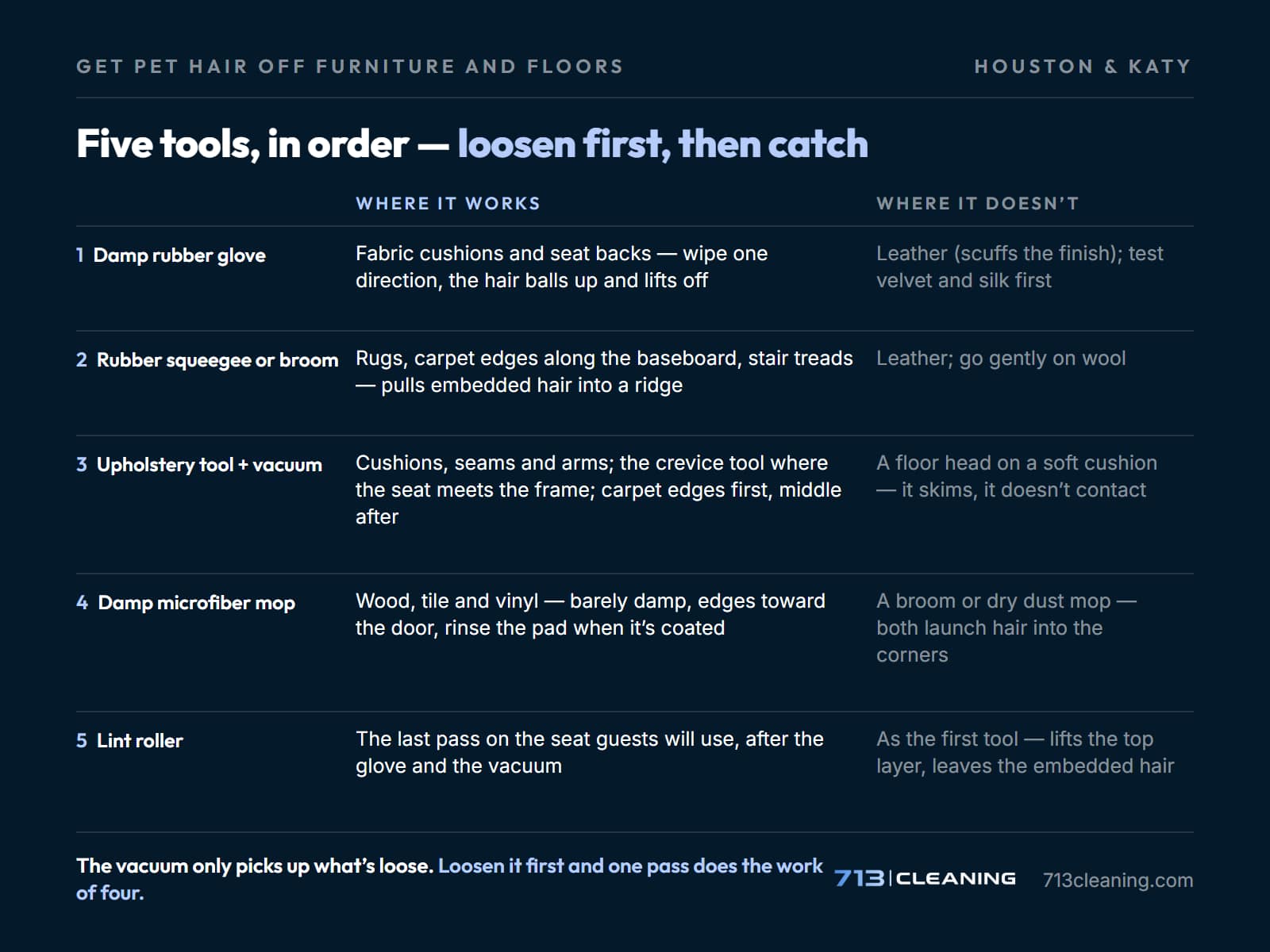
Get Pet Hair Off Furniture and Floors: The Five Tools, in Order
Pet hair on a surface is either loose or embedded. The vacuum only handles loose. Every tool below either loosens hair or catches loose hair, and the order runs loosen-then-catch so you aren’t vacuuming the same seat three times.
1. A damp rubber glove — for fabric furniture
Put on a dishwashing glove, dampen it under the tap, and wipe the cushion in one direction. Hair clings to damp rubber better than to the fabric it’s sitting in, so it gathers into a strip you can lift off in one piece. Rinse the glove and go again. This is the single tool I’d keep if I could only keep one.
2. A rubber squeegee or rubber broom — for rugs, carpet edges and stairs
A window squeegee dragged across a rug does what the glove does at floor scale: it pulls embedded hair into a ridge you can pick up. It’s also the tool for stair treads and the carpet edge along the baseboard, where the vacuum head doesn’t reach and the hair collects.
3. The upholstery tool with the vacuum — over both
Now the vacuum earns its keep. Use the small upholstery head, not the floor head, on cushions, cushion seams and the arm of the sofa; use the crevice tool along the back where the seat meets the frame. On carpet, do the edges first and the middle after. With the loosening done, one pass picks up what would have taken four.
4. A damp microfiber mop — for hard floors
Hair on wood, tile or vinyl moves on air, so a broom spreads it and a dry dust mop pushes it into the corners. A microfiber mop, barely damp, holds it. Work from the edges toward the door, rinse the pad when it’s coated, and the corners stop growing tumbleweeds.
5. A lint roller — the last pass, not the first
The roller finishes the seat the guests will sit on. It is the wrong first tool — it lifts the top layer and leaves the embedded hair — but after the glove and the vacuum it takes the last stragglers off in a pass. Keep one in the living room and one in the car.
Why the Vacuum Leaves Hair Behind
The vacuum picks up what’s loose. Three things keep hair from being loose: static on synthetic fabric, hair worked into the weave by someone sitting on it, and a floor head that skims a soft cushion instead of contacting it. The glove and the squeegee fix the first two, the upholstery tool fixes the third. A full bin or a clogged filter is the fourth reason, and the easiest to check.
Leather, Fabric, and What Not to Use
- Fabric sofa or chair: the glove, the squeegee and the upholstery tool are all safe. Test the damp glove on a hidden spot of velvet or silk first; some finishes water-mark.
- Leather: no rubber, no squeegee — both can scuff the finish. A cloth barely damp with water lifts hair off leather cleanly; dry it after.
- Wool rugs: the squeegee works, but go gently — a hard rubber edge can pull fibers.
- Any surface: skip dryer sheets and anti-static sprays. They leave a residue that attracts the next layer of hair and dust, and some are not labeled for use around pets.
Hard Floors vs Carpet: Where the Hair Actually Goes
On carpet, hair works down into the pile and stays until something pulls it up; that is why the squeegee matters, and why a vacuum head with a beater bar earns its keep on rugs. On hard floors, hair stays on top but travels — every time the AC kicks on it drifts to the same corners and under the same furniture. The fix is different for each: pull it up on carpet, hold it on hard floors, and on both start at the edges where it ends up.
The dirt that arrives with the hair — the rainy-day paws, the yard on a coat — is covered in where the dust actually comes in, so I won’t repeat the doormat rules here.
Keep Less Hair Arriving
Everything above is cleanup. The cheaper half is prevention, and the ASPCA’s advice is the honest version: you cannot stop a healthy dog from normal shedding, but brushing regularly reduces the amount of hair in your home. The same page notes that dogs kept indoors tend to shed evenly all year rather than in a spring blow-out — which, in a Houston house where the AC runs most of the year, describes a lot of dogs. That’s general grooming guidance; the right brush for your dog’s coat is a question for your vet or groomer, not for me.
Brush outside, on the same days you do the floors, and put a washable throw where the pet actually sleeps. The full set of habits is in house cleaning with pets.
What Good Looks Like
- The glove comes up nearly clean on the second wipe of a cushion.
- The vacuum bin has hair in it, not just dust — the loosening worked.
- The corners of the hard floors stay clear between cleanings.
- The throw goes in the wash and the sofa under it is fine.
If the sofa is hairy again by midweek, the fix is the brush and the throw, not a better vacuum.
Where the Line Sits
If floors are the part you’d rather hand off, our recurring house cleaning in Houston and Katy vacuums carpets and rugs and vacuums and mops the hard floors on every visit, with pet-safe supplies. The sofa is a different story, and it’s worth being clear about:
| Pet hair | Whose job |
|---|---|
| Carpets and rugs vacuumed, hard floors vacuumed and mopped, furniture and blinds dusted | The crew, every visit — lines on the published regular cleaning checklist |
| Hair on the sofa cushions and the pet’s bed | Yours — the crew straightens cushions; upholstery isn’t a checklist line |
| Baseboards hand-wiped, vents and return grilles | The deep clean, or an add-on |
| Brushing, the throw, the lint roller in the car | Yours |
The smell that sometimes comes with the hair is its own problem with its own method — how to get rid of pet odor covers it, including the part cleaning can’t fix.
Frequently Asked Questions
What is the best way to get pet hair off a couch? A damp rubber glove wiped in one direction, then the vacuum’s upholstery tool, then a lint roller for the last pass. The glove does the work; the other two finish it.
How do I get pet hair off hardwood floors without spreading it? A barely damp microfiber mop, edges first. Brooms and dry dust mops push hair into the air and the corners; damp microfiber holds it.
Does a lint roller work on pet hair? As the last pass, yes. As the first tool it lifts only the top layer and leaves the hair that’s worked into the fabric — loosen with a glove or squeegee first.
How often should I remove pet hair from furniture and floors? Get pet hair off furniture whenever the throw goes in the wash, and do the floors and the pet’s spots weekly. In the homes we clean, a multi-pet home or a shedding breed needs the weekly rhythm to stay ahead of it.