High-touch surfaces are the dozen things in a home that get touched by everyone, many times a day: door handles and knobs, light switches, faucet and flush handles, the fridge and microwave handles, remotes and phones, counters and the table. Wipe them regularly with a soap-based cleaner; disinfect them only while someone is sick.
The list is short on purpose. In the homes we clean, the surfaces that show hands first on arrival are the same few, the switch plates, the door edges and the handles, and a short list on a fixed day beats a long one that never happens. This post is the list, room by room, how often, and which spots a cleaning visit covers.
Key Takeaways
| Question | Short answer |
|---|---|
| What are high touch surfaces? | The things everyone in the house touches many times a day: handles, switches, faucets, the flush handle, remotes, phones, counters and the table. |
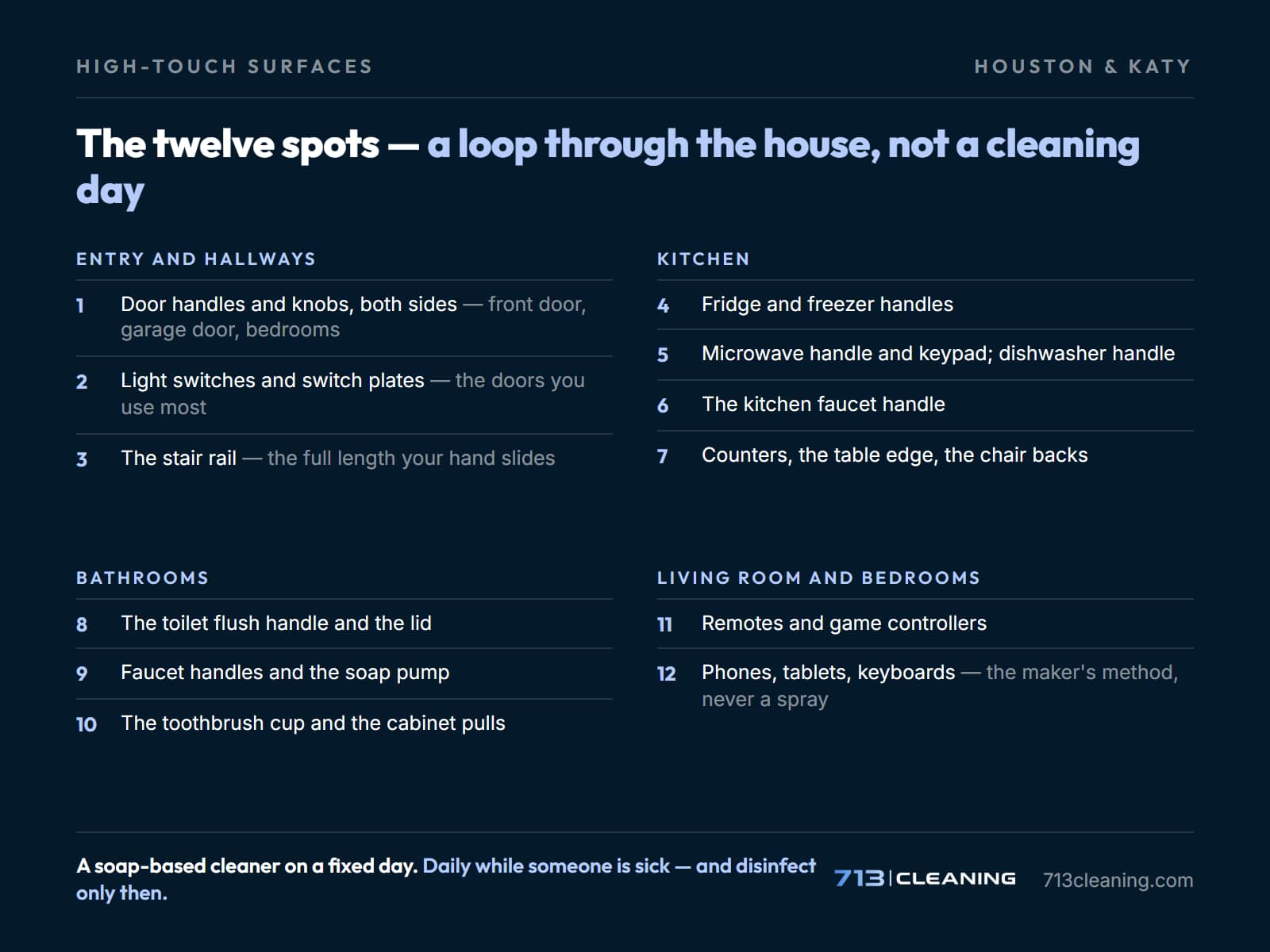
| How many spots? | Twelve, across four rooms. A loop through the house, not a cleaning day. |
| How often? | Regularly, on a fixed day, by the CDC’s guidance; daily while someone in the house is sick. |
| Clean or disinfect? | Clean with a soap-based cleaner as the routine. The CDC says disinfecting at home is likely not needed unless someone is sick. |
What Counts as a High Touch Surface
A high touch surface is anything three people would touch today without thinking about it. That’s the test, and it rules out most of the house: nobody touches the baseboards or the top of the fridge. It rules in a dozen small things that sit at hand height on the paths everyone walks. The CDC’s hygiene guidance for respiratory viruses names “countertops, handrails, and doorknobs” as the examples, and says to clean them “regularly” with “household cleaners that contain soap or detergent.” The twelve below are that list, filled in for a Houston family home.
High Touch Surfaces: The 12-Spot List, Room by Room
Entry and hallways
- Door handles and knobs, both sides, starting with the front door, the garage door into the house and the bedroom doors. In the homes we clean, the door edges around the handle show grime before the handle does; hands grab both.
- Light switches and switch plates at the doors you use most: the entry, the kitchen, the hallway, each bedroom and bathroom.
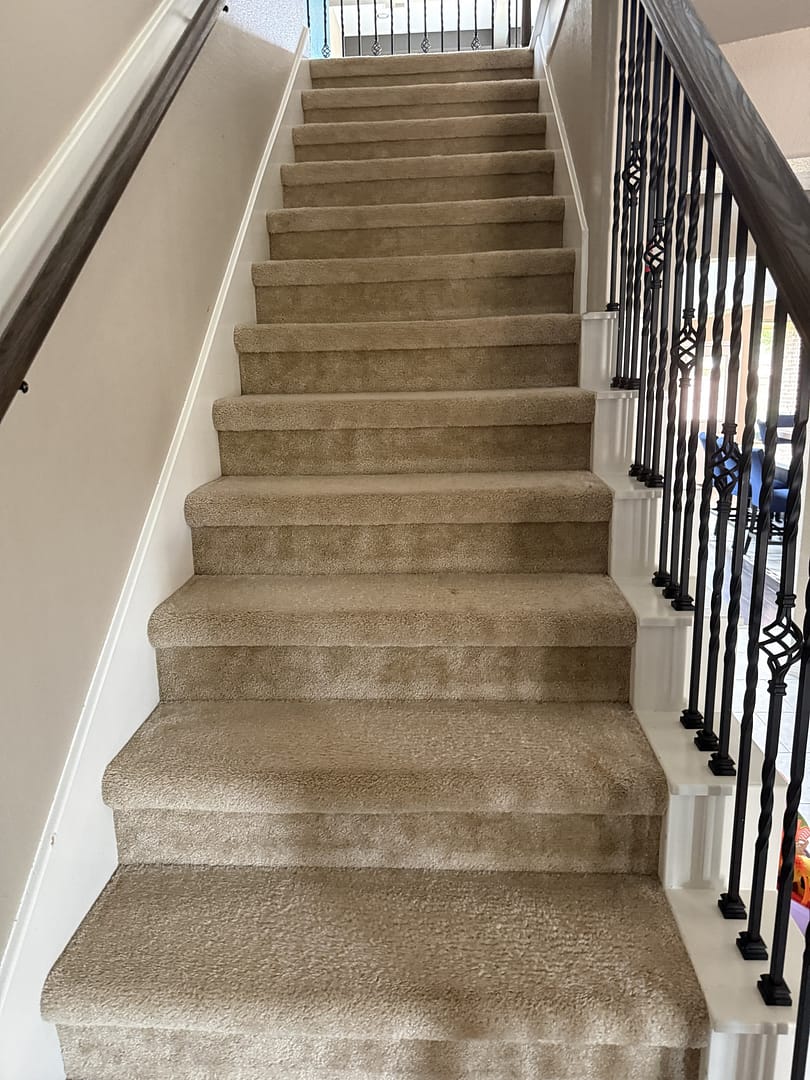
- The stair rail, if you have one, the full length your hand slides along.
Kitchen
- The fridge and freezer handles, pulled by everyone, all day.
- The microwave handle and keypad, and the dishwasher handle below it.
- The kitchen faucet handle, touched with dirty hands by design.
- Counters and the table edge, where hands rest, plus the chair backs everyone pulls out.
Bathrooms
- The toilet flush handle, and the lid.
- The bathroom faucet handles and the soap pump, the two things touched before the hands are clean.
- The toothbrush cup and the cabinet pulls, which is where a sick person’s bathroom and everyone else’s overlap.
Living room and bedrooms
- Remotes and game controllers, which rarely get cleaned because they’re nobody’s job.
- Phones, tablets and keyboards, touched constantly, and the ones no cleaning crew will ever wipe for you.

How Often to Wipe High Touch Surfaces
Regularly, on a fixed day, is the floor; daily while someone is sick is the ceiling. The CDC’s word is “regularly,” and it doesn’t give a number, so here’s the honest reasoning behind the one I’d use. A home where nobody is sick gets the twelve on the same day each week, because a loop that isn’t on a day doesn’t happen; at my house the small habits that survive are the ones tied to a moment, not a mood.
When school sends home the first note about something going around, the loop moves to every other day. When someone in the house is actually sick, it runs daily until they’re on the mend, and the room they’re in gets the after-illness reset on top.
Two things decide whether you need more than that: how many hands are in the house, and whether anyone is high-risk. A household of two adults touches the same handles far less than one with young kids and their friends; and if anyone at home is at higher risk, the CDC’s advice is to disinfect rather than only clean, and your doctor is the one to ask.
Clean, Then Disinfect (Only When You Have To)
A soap-based cleaner and a clean cloth is the whole method for eleven of the twelve. Spray the cloth, not the switch; wipe; move on. The CDC’s cleaning and disinfecting page is plain about it: “in most situations, cleaning alone with soap and water can remove most germs,” and disinfecting at home “is likely not needed unless someone is sick.” When someone is, clean the surface first, then a disinfectant used the way its label says, left wet for the time the label gives, one product at a time and never mixed with another.
The twelfth, electronics, is the exception: nothing sprayed into a phone or a remote, and the maker’s instructions win. The surfaces differ, so the products do too:
| Surface | Use | Avoid |
|---|---|---|
| Painted doors and switch plates | A soap-based cleaner on a damp cloth | Soaking the plate; spraying into the switch |
| Stainless and chrome handles | Soap and water, dried with a soft cloth | Bleach, abrasives, anything the finish’s maker rules out |
| Stone counters | A stone-safe or pH-neutral cleaner | Vinegar, lemon, any acid; bleach on sealed stone unless the sealer’s maker allows it |
| Wood table and chair backs | A barely damp cloth with a mild cleaner, dried at once | Soaking; bleach; disinfectant sprays that mark the finish |
| Remotes, phones, keyboards | What the maker says; usually a cloth barely dampened with the product they name, device off | Sprays into the device; abrasives; bleach |
Which High Touch Surfaces a Cleaning Visit Covers
Part of this list is on our checklist, and part of it never will be. The honest split, from the regular house cleaning checklist and the deep cleaning checklist:
- Every regular visit: high-touch surfaces sanitized, light switch plates wiped, kitchen sinks cleaned and sanitized, counters wiped, the exterior of the oven, fridge and dishwasher cleaned, cabinet fronts and handles spot-cleaned, toilets disinfected bowl to base.
- Every deep clean: light switches and switch plates hand-wiped, every accessible door’s edges and frames wiped, every cabinet door and handle hand-wiped, all high-touch surfaces sanitized.
- Never on a checklist: remotes, phones, tablets, keyboards and game controllers. They’re personal items, and the maker’s instructions are the only safe ones.
“Sanitize high-touch surfaces” is the checklist’s own line, and what it means in the clean-sanitize-disinfect sense is spelled out in what’s included in a deep cleaning. A visit resets the surfaces; the loop between visits is yours.
What Good Looks Like
- The twelve are on a day, and the day is written down somewhere the family sees.
- The cloth is clean when you start, and it’s a different cloth for the bathroom than the kitchen.
- Nothing is sprayed into a switch or a remote.
- The loop takes less of your evening than the dishes do. If it’s growing into a cleaning session, the list has grown; cut it back to the twelve.
Keep Going
The five-habit version of flu season, with hands, the kitchen and the air, is in cleaning during flu season; once someone has actually been sick, the room-by-room reset is cleaning after someone has been sick.
If you’d rather have the handles, switch plates and toilets reset for you every week or two, our recurring house cleaning in Houston and Katy sanitizes the high touch surfaces and disinfects the toilets on every visit. The remotes and phones stay yours.
Frequently Asked Questions
What are examples of high touch surfaces in a home? Door handles and knobs, light switches, the stair rail, the fridge and microwave handles, faucet handles, counters and the table edge, the toilet flush handle, the soap pump and toothbrush cup, remotes and game controllers, and phones, tablets and keyboards. Twelve spots, four rooms.
Should you use disinfecting wipes on high touch surfaces every day? Not unless someone in the house is sick, by the CDC’s guidance: cleaning with soap and water removes most germs in most situations, and disinfecting at home is for illness or a high-risk household. Daily wipes also mark some finishes; check the wipe’s label before it goes on wood, stone or a painted door.
How do you clean a remote or a phone safely? The way the maker says, which is usually a soft cloth barely dampened with the product they name, with the device off, and never a spray into the buttons or ports. Nothing abrasive and no bleach.
Does a cleaning service wipe door handles and remotes? A 713 regular visit sanitizes the high touch surfaces and wipes the light switch plates; a deep clean also hand-wipes the switches, every accessible door’s edges and frames, and every cabinet door and handle. Remotes, phones and other personal electronics are never on a checklist.