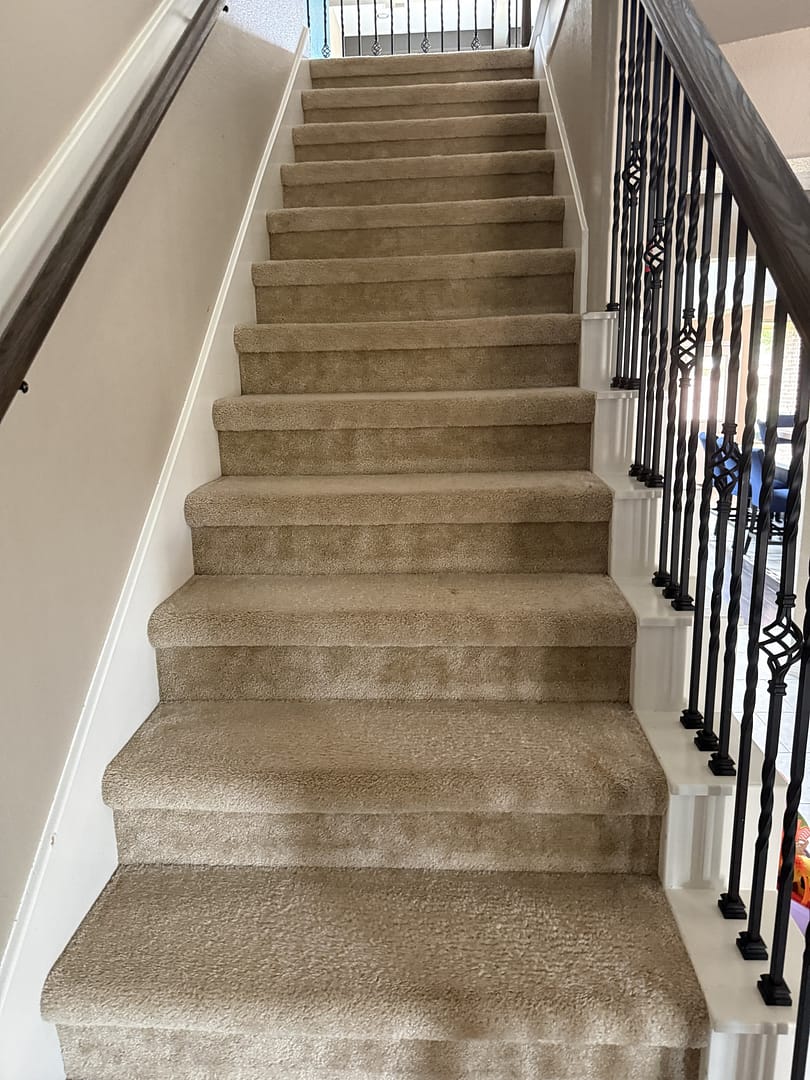
How to vacuum carpet so it actually works: clear the floor and check the bin and filter, set the height for your pile, do the edges first with the crevice tool, then slow, overlapping passes (about four swipes a strip, then the other direction), daily where the traffic is and weekly everywhere else.
Most carpet isn’t dirty because nobody vacuums it. It’s dirty because the vacuum moves at walking speed over the middle of the room, with the edges skipped and the bin half full. The Carpet and Rug Institute’s advice is slower and more boring than that, and it’s the version that keeps a carpet from wearing out early.
Here are the six steps, then how often by room, then the point where vacuuming stops and steam cleaning starts.
Key Takeaways
| Question | Short answer |
|---|---|
| What’s the single biggest change? | Speed. Slow, overlapping passes, about four over each strip, then across the other way. A fast once-over lifts the fluff and leaves the grit. |
| How often? | The CRI’s guidance: daily in high-traffic or pet areas, weekly as the floor for the rest. Stairs, hallways and entries are the daily spots. |
| Edges and stairs? | Edges first, with the crevice tool; stairs with the hose and a brush tool, top step down. Rugs from the center outward. |
| When isn’t vacuuming enough? | A set-in stain, or anything that has soaked into the padding. That’s steam cleaning, a separate, separately booked job; a pet accident gets an enzyme cleaner first, never steam. |

How to Vacuum Carpet: Why Slow Beats Often
Dirt on carpet is either on top of the pile or worked down into it, and the vacuum only gets the first kind easily. The Carpet and Rug Institute’s carpet cleaning tips put it as “removing soil when it’s on the surface, before it gets tramped down,” and the method it gives is the method: “use slow, repetitive motions that overlap (about four swipes),” and get “right up to the edges where dust, pollen, and pet dander like to accumulate.” Grit that gets walked into the pile is what wears the fibers, so the slow pass isn’t fussiness; it’s what makes the carpet last.
That’s the whole of how to vacuum carpet well: slowly, to the edges, and often enough for the traffic. The six steps below are that sentence, in order.
The Six Steps
1. Clear the floor and check the machine
Pick up what’s on the carpet first; vacuuming around toys cleans around toys. Then the machine: empty the bin or the bag, check the filter, and cut the hair and thread off the brush roll with scissors. Before blaming a vacuum that “doesn’t pick up anymore,” check those three; each one stops the pickup before anything is broken. A lightweight cordless one parked where it’s convenient is what gets the daily spots done at our house; the big one does the weekly pass.
2. Set the height for the pile
Most uprights have a height dial, and the setting your vacuum’s manual gives for your carpet is the right one: too low and the brush stalls or drags, too high and the head skims without contact. Wool rugs and shags get suction only, no spinning brush; a beater bar pulls their fibers. If the manual is long gone, the maker’s site usually has the setting by model.
3. Edges first, with the crevice tool
The head is wider than the gap it needs to reach, so the strip along every baseboard and under the lip of the sofa gets done on purpose, with the crevice tool, before the main pass. That line is where the dust and the hair collect, and it’s the line that shows as a darker edge when it’s skipped. On carpet with a pet, the edge is also where the hair sits; the tools that get it out are in how to get pet hair off furniture and floors.
4. Slow, overlapping passes, then the other way
This is the step that changes the result. Push the head forward slowly, pull it back over the same strip, and overlap the next strip; about four swipes over each strip, which is the CRI’s number. When the room is done one way, cross it the other way. The pile stands up differently in each direction, and the second direction lifts what the first laid flat.
5. Match the frequency to the traffic
Not every carpet in the house gets the same schedule. The CRI’s guidance is that “generally once a week with a CRI-certified vacuum is a good place to start,” and that “high-traffic or pet areas should be vacuumed daily.” In a Houston house the daily spots are the entries (sand and grit), the hallway and the stairs, and wherever the pet sleeps; the bedrooms are weekly. With young kids and a yard, the entry mat and the hallway are the two that never get a week off at our house.
6. Rugs and stairs by hand
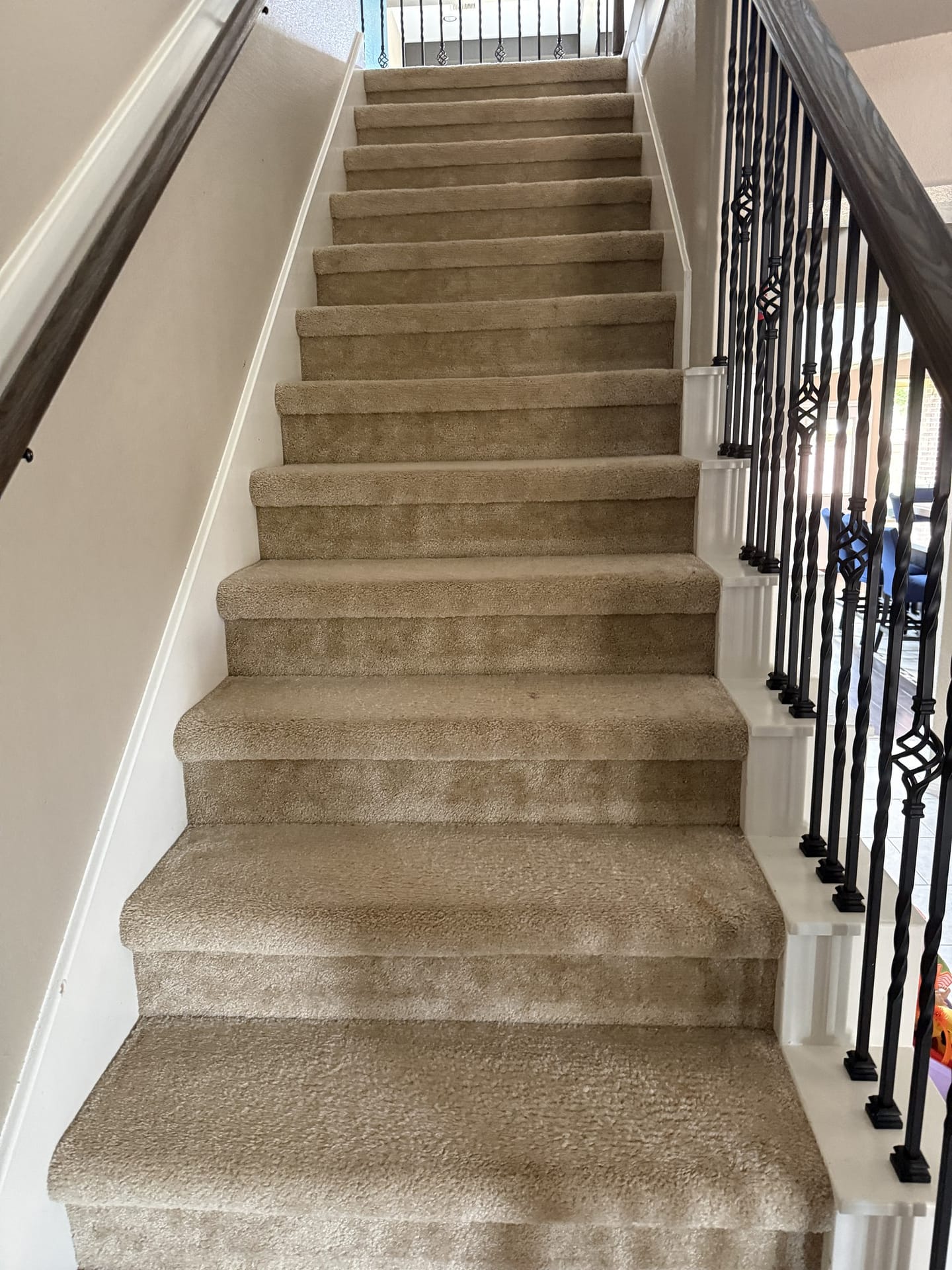
Rugs are vacuumed from the center out to the edges, because the edges fray when the head catches them; a rug with fringe gets the fringe done by hand or skipped. Stairs are the busiest carpet in the house, and the upright can’t do them: the hose and a brush tool, top step down, the tread and then the riser, with the crevice tool in the corner where the two meet.
How Often to Vacuum Carpet in a Houston Home
Weekly is the floor and daily is the ceiling, and the Houston reasons to lean toward daily in the busy spots are dust and sand. The AC runs most of the year here, so dust keeps circulating and landing; the beach is a weekend away, so sand comes home in the car and on the kids; and if there’s a dog, its spots are daily by the CRI’s own rule. The allergy version of the schedule, with the bedding and the filter, is in an allergy season cleaning schedule for Houston.
When Vacuuming Isn’t Enough: Steam Cleaning, Separately
Vacuuming lifts what’s loose. It doesn’t lift a stain that has set, and it doesn’t reach anything that has soaked through to the padding. The CRI’s own guidance is that carpet should be “professionally deep cleaned every 12 to 18 months,” on top of the vacuuming. Steam carpet cleaning is a separate service with its own carpet steam cleaning booking page; it isn’t part of a regular or deep house cleaning visit, and on a move-out it appears on the move-out cleaning checklist as an add-on.
One exception to the order: a pet accident. Enzyme cleaner first, applied wet and left to work, and never steam on a urine spot, because the heat sets the stain and the smell into the fibers; the full method, and what’s past fixing once urine is in the padding, is in how to get rid of pet odor. For any other spill, the CRI’s rule is to “scoop up solids and blot liquids with a dry, white cloth,” and “do not scrub.”
What a Cleaning Visit Does for Carpet (and What It Doesn’t)
On every regular visit the crew vacuums all carpets and rugs, and on a deep clean vacuums them including the edges; both are lines on the deep cleaning checklist and the regular one. The honest split:
- Every visit: all carpets and rugs vacuumed. Deep clean: including the edges, with the corners detailed.
- Yours, before the visit: picking up the floor. Scattered items (toys, shoes, books) are grouped to clean under, not cleaned around.
- Nobody’s: moving furniture to vacuum under it; our teams don’t move furniture.
- A separate job: steam cleaning, stain removal, anything in the padding. The visit lifts what’s loose and leaves the carpet looking vacuumed, which is what vacuuming does.
What Good Looks Like
- The bin has grit in it, not only fluff, after the weekly pass.
- The edges aren’t a darker line along the baseboards.
- The stairs look like the hallway, not like the most-walked carpet in the house.
- The pile stands up in the traffic lanes after the second direction, instead of lying flat and shiny.
If the lanes stay matted and shiny no matter how slowly you go, the fibers are crushed or the carpet is holding more than a vacuum lifts; that’s the steam-cleaning conversation, or a carpet one.
Keep Going
The other three floors in the house, with the product rules for each, are in how to clean different types of floors; the floor that moves with the Houston air is in hardwood floors and humidity.
If the vacuuming is the part you’d rather hand off, our recurring house cleaning in Houston and Katy vacuums all the carpets and rugs on every visit, with the same trusted team each time. The daily pass on the stairs and the entry, and the steam cleaning, stay where this page put them.
Frequently Asked Questions
How often should you vacuum carpet? By traffic, not by calendar: the Carpet and Rug Institute’s guidance is daily in high-traffic or pet areas and generally once a week as the starting point for the rest. In a Houston home the daily spots are the entries, the hallway, the stairs and wherever the dog sleeps.
Should you vacuum carpet in different directions? Yes. Finish the room in one direction with slow, overlapping passes, then cross it the other way. The pile lies differently in each direction, and the second pass lifts what the first pressed flat; it also leaves the even lines people like.
Does vacuuming wear out carpet? The opposite, done right: the CRI’s reason for vacuuming is that soil left in the pile wears the fibers, and lifting it extends the carpet’s life. What does wear carpet is a beater bar on a wool or shag rug, and a head set so low it drags; both are the wrong setting, not vacuuming itself.
Can vacuuming remove carpet stains? No. Vacuuming lifts loose soil; a stain is in the fiber, and anything that has reached the padding is below what any vacuum touches. Blot a fresh spill, never scrub it, and a set stain or a pet accident is a steam cleaning or enzyme job, in that order of caution: enzyme first on urine, never steam.